

DFW's Top Lutron Panelized
Lighting Systems Installation
Walk through a properly designed DFW luxury estate and look at the walls. There are no visible dimmers — just clean, slim keypads in coordinated finishes. No banks of switches. No mismatched wall plates in different depths depending on what's behind them. Just keypads.
The dimmers are somewhere else entirely. They're in a dedicated equipment room — organized in a panel, wired to every load in the home, managed by a processor that handles the entire lighting system. The wall is an interface. The intelligence is centralized.
That is a panelized
lighting system install. And for DFW luxury estates where the architectural design extends to every surface, it's the correct specification.
Premier Lighting & Home Automation installs Lutron HomeWorks QSX panelized lighting systems for luxury homes across Dallas-Fort Worth
— from the equipment room panel design and QS Link wired architecture through commissioning and the full scene library.
Here's who & what you'll have working for you...
- A+ Rated BBB Company
- 7 Lutron Certifications
- 30+ Years Experience
- 500+ Luxury Installations
We hold HomeWorks certification and have the technical depth to deliver the wired architecture correctly for custom homes where wireless isn't the right answer.
...feel free to contact us for a no-pressure information-based quote or call Premier at
1(214)214-9458.
What Is a Panelized Lighting System?
A panelized lighting system is a fundamentally different architecture from the standard smart lighting approach — and understanding the difference is the starting point for specifying the right system for a DFW luxury custom home.
Standard smart lighting:
Each wall location has a dimmer or keypad-dimmer. The dimming hardware is at the wall box.
The device controls its local circuit. Scenes and programming run through a central processor, but the physical dimming is distributed across every wall location in the home.
Panelized lighting system:
The dimming hardware is consolidated in a dedicated equipment panel, typically located in an AV or mechanical equipment room. Wall locations have keypads only — no dimmer module at the box, just the interface.
The keypad sends a command to the central processor. The processor tells the panel to dim the assigned circuit. The physical switching and dimming happens at the panel, not at the wall.
The operational experience is identical from the homeowner's perspective — a keypad press activates the scene, the lights respond. The architectural difference is in what lives at the wall and what lives in the equipment room.
For DFW custom homes where the wall finish is part of the interior design, removing the dimmer module from every wall location and replacing it with a slim keypad changes the entire character of the space.
Why Panelized Systems Are the Right Specification for Large DFW Estates
The choice between a fully wireless system, a hybrid wired-wireless system, and a fully panelized wired system isn't a personal preference — it's a technical specification decision driven by the home's size, construction, load requirements, and design intent.
Construction type.
The thickest walls. The densest materials. Rock-solid QS wiring offers a trusted solution for the most challenging architectural conditions.
Many DFW luxury custom homes — particularly in Westlake, Southlake, and North Dallas — are built with construction techniques that create RF challenges: reinforced concrete, spray foam insulation, metal framing, plaster walls, or significant distances between the equipment room and remote zones. In those environments, wired QS Link is the reliable specification. The signal doesn't depend on RF propagation through construction materials.
Load complexity.
A panelized system's DIN module architecture allows each dimming module to be specified for the precise load type it controls — LED drivers, incandescent circuits, 0-10V ballasts, high-wattage specialty loads. Heat from dimming hardware is managed at the panel level rather than at dozens of individual wall boxes.
For DFW custom homes with large architectural LED fixture loads, high-wattage decorative fixtures, or mixed load types across the property, centralized load management at the panel is the correct approach.
Interior design integration.
When every wall location carries only a keypad — no dimmer depth behind the plate — the wall treatment can be planned consistently across the home. A Palladiom keypad in Satin Nickel on a plaster wall is a design element. A combination of different-depth dimmer plates and keypad plates in multiple finishes is a visual inconsistency.
For DFW luxury homes where the interior designer has specified every wall surface, hardware finish, and plate detail, the panelized architecture gives them a consistent canvas.
Maintenance and serviceability.
When all dimming hardware is centralized in a panel, a service call doesn't require opening wall boxes across the home. The technician goes to the equipment room. Everything is organized, labeled, and accessible.
For DFW homeowners, this means that a future service event — firmware update, circuit expansion, module replacement — is a clean, organized process rather than a multi-room operation.
HomeWorks QSX Wired Architecture — How It Works
HomeWorks QSX brings HomeWorks QS wired, wireless, and Ketra together into a single system, making HomeWorks easier to design, install, activate, program, and service. The wired component of that architecture is the QS Link network — the backbone that connects the processor to every panel, every keypad, and every wired device in the home.
The QSX Processor
is the system's brain — housed in the equipment room, handling all control and communication for the home's lighting and shading. The processor manages scene libraries, scheduling, device communication, third-party integrations, and cloud connectivity. A single QSX processor handles up to 10,000 zones. Multiple processors can be paired for the largest estate projects.
DIN Modules
are the physical dimming hardware — installed in the equipment room panel on DIN rails, each module controlling a set of lighting circuits. The DIN architecture allows each module to be specified for its specific load type and replaced individually without affecting other circuits. The panel houses the modules, wire landing boards, and power supplies in a single organized enclosure.
QS Link wiring
runs from the panel to every keypad location, every sensor, and every wired device in the home. This is the signal network — not the power wiring, which runs separately from the panel to the fixtures. QS Link is a low-voltage, four-conductor cable that carries communication data and power to keypads and devices throughout the home.
Keypads at wall locations
— seeTouch, Palladiom, or Alisse, depending on the design specification — receive the homeowner's input and transmit it over QS Link to the processor. The processor responds by sending dimming commands to the appropriate DIN modules in the panel. The circuit responds.
Clear Connect RF wireless devices
can be added to the same HomeWorks QSX system alongside wired circuits — retrofit zones, outbuildings, areas where running QS Link wire isn't practical. The panelized architecture doesn't preclude wireless expansion. It establishes the wired core of the system and allows wireless devices to be integrated where they make sense.
Call us at
214.214.9458
or
contact to schedule a consultation.
Panel Room Design — What the Equipment Space Requires
A panelized Lutron system requires dedicated equipment space. For DFW custom home projects, planning that space correctly during the design phase is significantly more cost-effective than retrofitting it after construction.
Panel size. HomeWorks QSX configurable panels are available up to 63.5 inches tall, with an optional door for finished equipment rooms. The panel size depends on the system's circuit count and the number of DIN modules required. Premier sizes the panel during the system design phase — before the equipment room is framed.
Location. The equipment room should be centrally located on the property to minimize QS Link wire runs to remote zones. For DFW estates where the main house and a guest house or pool house are separate structures, panel location affects the distribution architecture. Premier maps the optimal panel location relative to the home's zone distribution during the design phase.
Power supply. Each panel requires dedicated electrical supply for the DIN modules and processor. The panel's power supply requirements are calculated based on the total connected load and provided to the electrical contractor during rough-in coordination.
Temperature and ventilation. DIN modules generate heat proportional to their load. The equipment room should maintain a reasonable ambient temperature and have appropriate ventilation to ensure long-term module performance. For DFW custom homes with enclosed AV rooms, Premier coordinates the ventilation requirements with the mechanical engineer during the design phase.
Access and organization. A properly installed HomeWorks QSX panel is organized, labeled, and documented. Every circuit is labeled at the panel and mapped to its location in the as-built documentation. Future service events — expansion, module replacement, circuit reassignment — are straightforward because the panel is organized to support them.
Legacy HomeWorks Panel Upgrades
A significant number of DFW luxury estates built in the 2000s and 2010s are running legacy HomeWorks systems — HomeWorks QS or older HomeWorks Illumination — with existing panel infrastructure.
For these homeowners, the question is whether to replace the system entirely or upgrade the existing panel to the current QSX platform.
At CEDIA Expo 2024, Lutron debuted the Panel Link to QS Link Translator, which allows legacy RPM and Spec Grade Panels to communicate over the QS Link to a QSX processor. Working in tandem with the RPM to DIN Subplate launched in 2021, this solution streamlines the upgrade process for
installers, providing significant benefits for both integrators and homeowners.
The practical implication for DFW homeowners:
the existing panel infrastructure stays. The legacy RPM panels — the physical enclosures and wire landing boards that are built into the equipment room — remain in place.
The Panel Link to QS Link Translator bridges communication from those panels to a new QSX processor. The home moves to the current HomeWorks platform without the cost and disruption of a full panel replacement.
A HomeWorks upgrade allows homeowners to enjoy advanced luxury features in lighting, shades, and controls, with seamless system communication — all without major renovations. Peace of mind that the
lighting control system
will continue working, delivering a better experience without the hassle of a full renovation project.
What the upgrade unlocks: native Ketra intelligent lighting integration, cloud connectivity through Lutron Connect, the current HomeWorks Designer programming environment, Palladiom keypad compatibility, and ongoing Lutron security updates and new feature releases.
For DFW homes where the existing HomeWorks system is reliable but the homeowner wants Ketra, the keypad upgrade, or simply the confidence that the system is on the current supported platform, the Panel Link translator upgrade is the right-sized scope — not a full system replacement.
Premier manages the full upgrade process: Panel Link translator installation, database migration from the legacy system to QSX format, keypad upgrade where specified, recommissioning, and testing.
Panelized Systems and Ketra Intelligent Lighting
HomeWorks QSX's native Ketra integration is the most compelling capability argument for specifying the current platform over a legacy QS system or a wireless-only RA3 installation.
Lutron launched Native Ketra integration with Clear Connect Gateway - Type X, which streamlines the design, activation, programming, and support of Ketra in a HomeWorks system. The new Clear Connect Gateway incorporates up to 200 Ketra devices into a HomeWorks system using Clear Connect Type X wireless technology.
For DFW estates with panelized HomeWorks QSX systems, Ketra intelligent lighting is added through the Clear Connect Gateway — it communicates wirelessly with Ketra fixtures throughout the home, managed within the same HomeWorks Designer programming environment as every other device in the system. The fixture specification and the control system are programmed as a unified architecture.
The scene that activates at "Good Evening" dims the wired DIN module circuits on the panel, commands the Ketra fixtures to shift their color temperature toward warm amber, and lowers
the motorized shades to their evening position — all from the same button press, programmed in the same programming tool, managed by the same processor.
For DFW luxury estates where the interior design includes significant architectural lighting from Ketra's fixture catalog — the S38 track luminaire, the Lightbar Slim linear, the Rania A20 lamp — the panelized HomeWorks QSX system is the platform that serves the full scope correctly.
New Construction
— The Right Time to Specify
A panelized HomeWorks QSX system is always easier to install in new construction than in an existing home.
The pre-wire window — before drywall goes up — is the moment when running QS Link wire to every keypad location, every sensor, and every wired device in the home is a straightforward coordination task rather than an invasive retrofitting project.
Premier engages with DFW custom home projects during the design phase — before the electrical drawings are issued for permit — to plan:
- Equipment room location and panel size relative to the home's zone distribution
- QS Link wire routing to every keypad location, every sensor zone, and every wired device
- Panel power supply requirements for the electrical contractor
- Keypad location confirmation against the architectural and millwork drawings
- Load circuit mapping — which fixtures are on which circuits, which circuits are on which DIN modules
- Rough-in coordination with the electrical contractor for both the signal wiring (QS Link) and the load wiring (fixture circuits)
For DFW custom home builders in Westlake, Southlake, Prosper, Celina, Frisco, and Colleyville, Premier works as the Lutron panelized system subcontractor — coordinating with the GC, electrical contractor, and lighting designer throughout the project.
The alternative — specifying the system after rough-in — creates compromises. Wireless fills for zones that should have been wired. Conduit runs through finished walls. Keypads located where wire access was possible rather than where design intent required them.
For DFW custom home clients who have invested in the architect, the lighting designer, and the interior designer, those compromises are avoidable with early specification.
What a Premier Panelized System Installation Includes
Every panelized HomeWorks QSX project Premier delivers covers the full scope:
- System design — zone count, DIN module specification, panel size, QS Link routing map
- Equipment room planning — panel location, power supply requirements, ventilation coordination
- Pre-wire coordination with GC and electrical contractor during new construction
- Panel assembly — DIN modules, wire landing boards, power supplies, Panel Link translator for upgrades
- QS Link wiring installation throughout the home
- Keypad installation — seeTouch, Palladiom, or Alisse per design specification, in specified finishes
- Processor installation and configuration
- Clear Connect Gateway installation for Ketra integration where specified
- Full HomeWorks Designer programming — scene library, schedules, occupancy sensors, third-party integrations
- Ketra commissioning where specified — fixture calibration, Vibrancy settings, Natural Show programming
- Motorized shade integration — Sivoia QS and Palladiom shades programmed within the HomeWorks system
- Control4 or Savant integration where applicable
- Commissioning and testing — every circuit confirmed, every scene tested, every integration verified
- Homeowner walkthrough and training
- As-built documentation — circuit maps, panel labeling, scene library index
For legacy upgrade projects, the scope also includes database migration from the existing HomeWorks QS database to QSX format, Panel Link translator installation, and full recommissioning of the migrated system.
FAQs About Lutron Panelized Systems
Below are answers to the most common questions homeowners, builders, architects, and designers ask about HomeWorks QSX systems, QS wired infrastructure, Ketra integration, and upgrade paths for luxury homes in the DFW market.
What is the difference between a panelized Lutron system and a wireless HomeWorks system?
Answer: In a panelized system, all dimming hardware is consolidated in a dedicated equipment room panel — wall locations carry keypads only. In a wireless or hybrid system, dimmer modules may be located at wall boxes throughout the home. The panelized architecture removes all dimming hardware from wall locations, giving every wall surface a consistent, slim keypad profile. Both approaches use the same HomeWorks QSX processor and programming environment. The choice depends on construction type, load complexity, and the home's interior design requirements.
Why is wired QS Link better than wireless
for a large DFW estate?
Answer: QS wired link is the specification for homes where RF performance is a concern — reinforced concrete, spray foam insulation, metal framing, plaster walls, or very large distances between the equipment room and remote zones. The wired signal is not subject to RF propagation challenges from construction materials. For most DFW luxury estates in the 5,000–20,000+ sq. ft. range with demanding construction, wired QS Link provides absolute reliability where RF signal strength would be variable.
Can a legacy HomeWorks system be upgraded to QSX without replacing the panel?
Answer: Yes. Lutron's Panel Link to QS Link Translator, launched at CEDIA Expo 2024, allows legacy RPM and Spec Grade Panels to communicate with a new QSX processor. The existing panel enclosures and wire infrastructure stay in place. The upgrade delivers the current HomeWorks QSX platform — including native Ketra integration, Palladiom keypad compatibility, and cloud connectivity — without a full panel replacement. Premier manages the complete upgrade: translator installation, database migration, recommissioning, and testing.
What equipment room requirements does a panelized HomeWorks system need?
Answer: The equipment room needs adequate space for the panel enclosure (up to 63.5 inches tall depending on circuit count), dedicated electrical supply for panel power, and appropriate temperature and ventilation for the DIN modules. Premier provides panel sizing and equipment room requirements to the GC and electrical contractor during the design phase of new construction projects.
Can a panelized system include
Ketra intelligent lighting?
Answer: Yes. HomeWorks QSX integrates natively with Ketra through the Clear Connect Type X Gateway — up to 200 Ketra devices per gateway, managed within the same HomeWorks Designer programming environment as every wired circuit in the panel. Ketra communicates wirelessly to its fixtures, while the wired QS Link handles the balance of the system. The two technologies are designed to coexist within the same HomeWorks QSX architecture.
When should a DFW custom home specify a panelized system versus a wireless RA3 system?
Answer: A panelized HomeWorks QSX system is the right specification for homes over approximately 5,000 sq. ft. with demanding construction, high load complexity, more than 100–150 zones, or where the interior design requires consistent slim keypads throughout. Lutron's RadioRA 3 is the right specification for most luxury homes in the 2,500–7,500 sq. ft. range where wireless performance is adequate and project economics don't warrant the additional complexity and investment of a fully wired system.
Premier assesses the correct platform for each project during the consultation phase.
Call us at
214.214.9458
or
contact us here
to schedule a consultation.
Lutron Panelized System Installation Areas in Greater Dallas
Addison, TX
Digital home automation and lighting control solutions designed for refined Addison homes.
Allen, TX
Smart home automation and motorized shades tailored for comfort and efficiency in Allen.
Arlington, TX
Advanced domotics and intelligent home services for modern Arlington living.
Carrollton, TX
Electric Power Control services and seamless home control systems in Carrollton.
Coppell, TX
Integrated home automation management systems for elevated Coppell residences.
Dallas, TX
Climotics control systems and Home Automation Control Systems across Dallas.
Fairview, TX
Digital home automation and lighting control enhancing Fairview homes.
Flower Mound, TX
Smart home automation and motorized shading solutions in Flower Mound.
Frisco, TX
Domotics and intelligent home services built for Frisco’s growing communities.
Grapevine, TX
Electric Power Control services and complete home control systems in Grapevine.
Highland Park, TX
Luxury home automation management systems tailored for Highland Park estates.
Keller, TX
Climotics control systems and seamless digital home automation in Keller.
Lewisville, TX
Smart home automation and lighting control for Lewisville homeowners.
Lucas, TX
Advanced domotics and intelligent home services in Lucas.
McKinney, TX
Integrated Home Automation Control Systems across McKinney.
Oak Cliff, TX
Digital home automation and electric power control services in Oak Cliff.
Park Cities, TX
Smart home automation and motorized shade systems in Park Cities.
Plano, TX
Domotics and complete home control services in Plano.
Preston Hollow, TX
Luxury intelligent home services for Preston Hollow residences.
Prosper, TX
Climotics control systems and digital home automation in Prosper.
Richardson, TX
Advanced Home Automation Control Systems in Richardson.
Southlake, TX
Smart home automation and lighting control in Southlake.
The Colony, TX
Digital home automation and motorized shading in The Colony.
University Park, TX
Luxury intelligent home services and automation in University Park.
Collin County
Comprehensive digital home automation and lighting control across Collin County.
Dallas County
Smart home automation and electric power control services throughout Dallas County.
Denton County
Advanced home automation management systems across Denton County.
Tarrant County
Integrated Home Automation Control Systems serving Tarrant County homeowners.

Expert Installation and Support
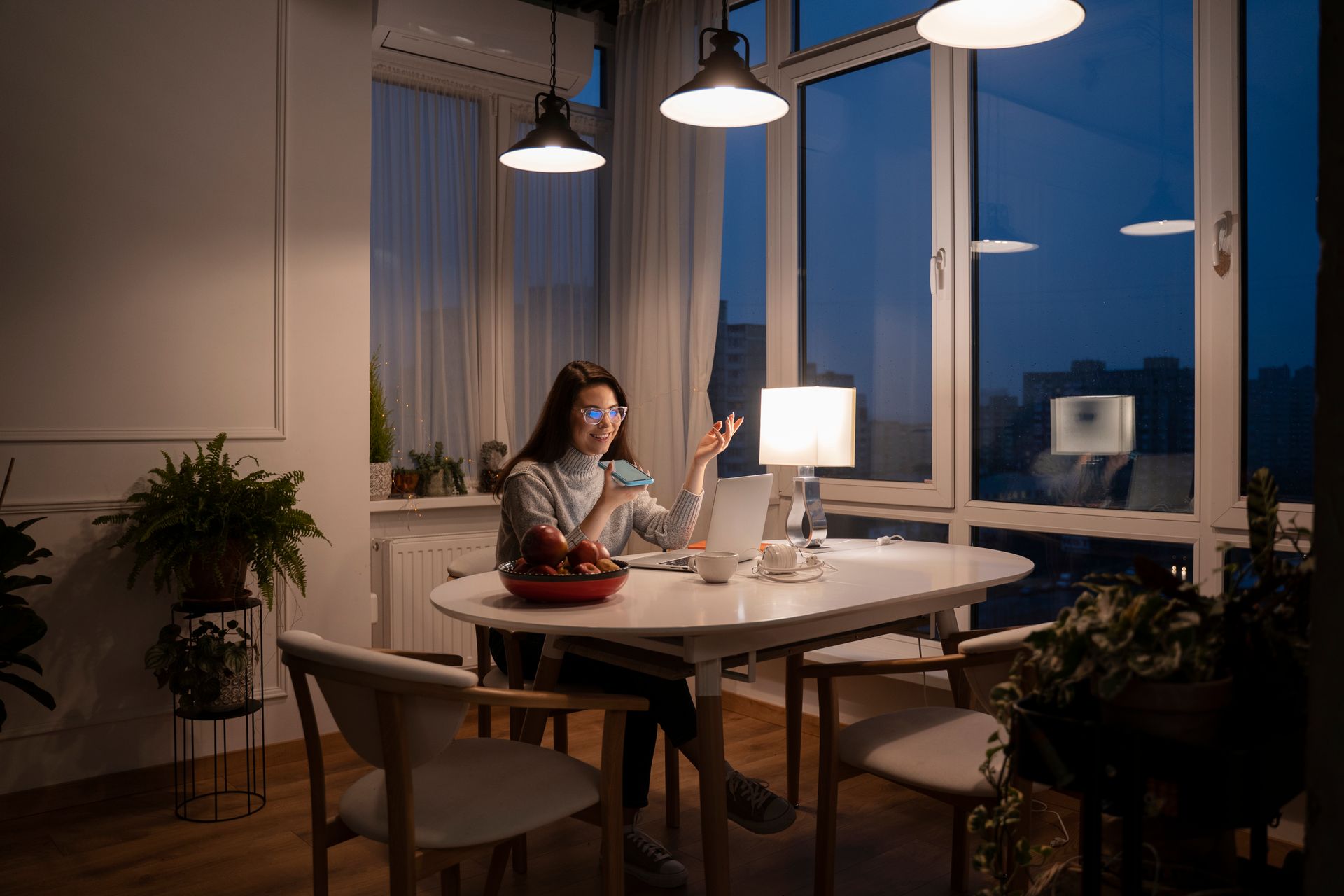
Custom Design Consultation
Work with our experts to design a lighting system that perfectly fits your lifestyle and home aesthetics.
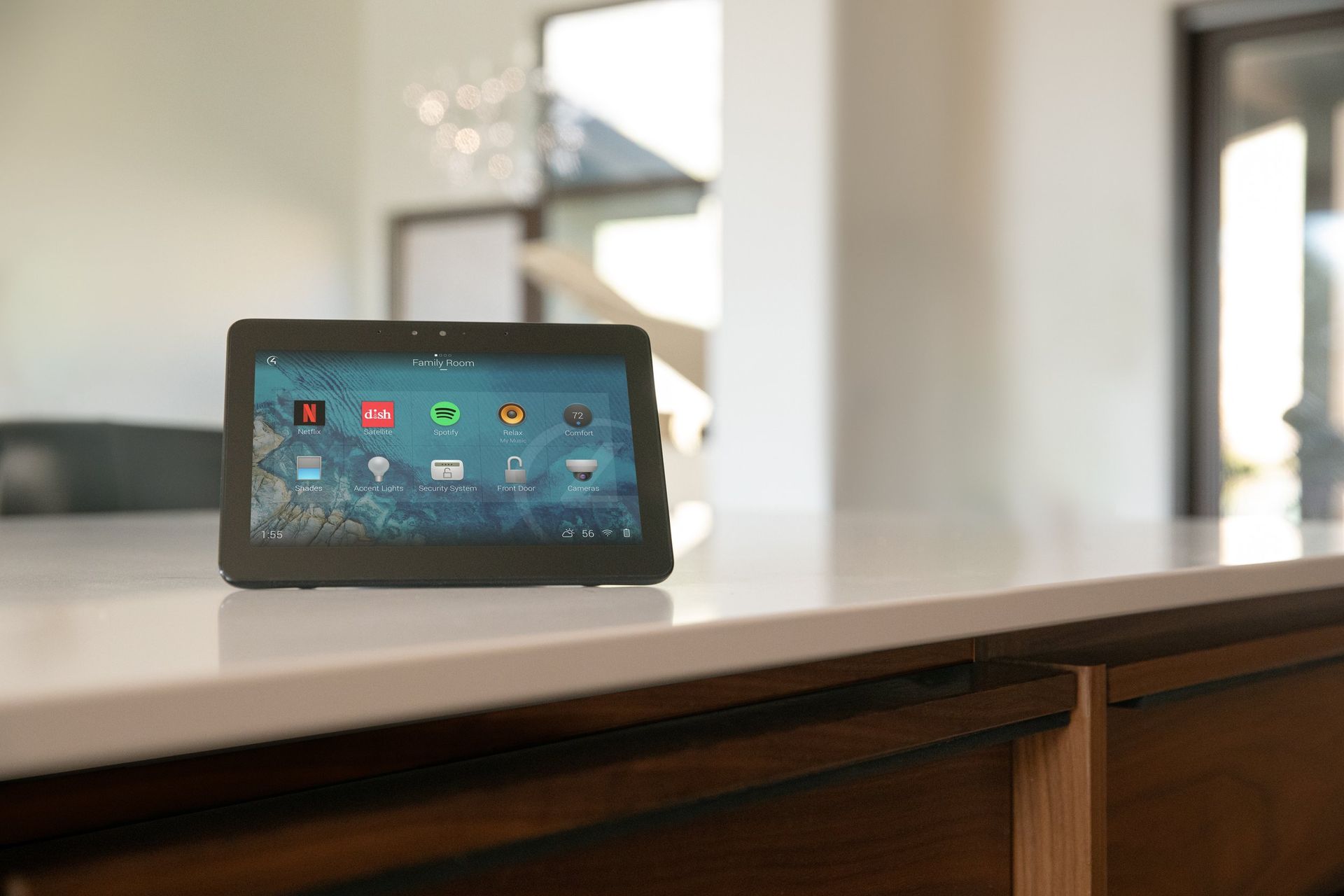
System Integration and Upgrades
Enhance your existing setup with the latest technology for improved performance and convenience.
What Our Clients Say About Us
“Switching to Lutron Radio Ra2 has completely transformed our home ambiance. The ease of use and seamless integration with our existing systems is unparalleled.”
Melissa B.
“The Lutron Homeworks Lighting system has made managing our home lighting so much more efficient. We love the convenience it brings to our daily routine.”
Shelby S.
“Vantage Lighting has elevated our home’s aesthetic to a new level. The customizable settings are perfect for every occasion.”
Daniel R.
Compare Our Lighting Control Systems
Explore the distinctive features of our top lighting control systems to find the perfect fit for your home.
Lutron Radio Ra3
Wireless Control
Energy Efficiency
Scalability
Integration Options
User-Friendly Interface
Customizable Scenes
Lutron Homeworks
Luxury Lighting Control
Energy Efficiency
Cutting-Edge Design
Advanced Integration
Fully-Customizable Lighting
Elegant Keypads
Vantage Lighting
Remote Access
Voice Control
Smart Home Compatibility
Energy Monitoring
Scene Personalization
Robust Security Features
Ready to Transform Your Home?
Authorized Dealer & Distributor In TX





Get In Touch w/ Premier Lighting Today!
Have a question or ready to start your project? Please fill out the form below, and the Premier Lighting & Home Automation team will respond to you promptly.