
What's the Difference Between RadioRA 3 and HomeWorks?
Complete Guide to Lutron RadioRA 3 vs. HomeWorks QSX — Why Choosing the Right Certified Installer Matters More Than the System Itself
If you've been researching Lutron lighting control and come across both RadioRA 3 and HomeWorks, you've probably noticed one thing: almost nobody explains the difference in plain language.
Most electricians can't — because they've never programmed either one.
At Premier Lighting & Home Automation, LLC,
we install, design, and program both systems across the Dallas–Fort Worth area. We're not just pulling wire and flipping breakers — we're Lutron specialists who understand these platforms at a deep level.
So if you've been wondering which system is right for your home, you're in exactly the right place.
Let's break it down.
First: Why Does It Even Matter Which System You Choose?
Because they are not interchangeable — and choosing the wrong one either means you overspend on a system you didn't need, or you end up with one that can't do what you eventually want.
Lutron currently offers three
residential lighting control platforms: Caséta (their entry-level system),
RadioRA 3, and
HomeWorks QSX. This post focuses on the latter two — the ones serious homeowners choose when they want genuine smart home lighting, not just a few app-controlled switches.
The difference between them is not just price. It's philosophy, architecture, and capability.
RadioRA 3: Premium Wireless Lighting Control
RadioRA 3 is Lutron's mid-to-high-tier residential lighting system. It's entirely wireless, built on Lutron's proprietary Clear Connect RF technology — one of the most reliable wireless protocols in the industry. No interference, no dropouts, no relying on your home's Wi-Fi.
Best for:
- Homes from ~1,500 to 7,500 sq ft
- Retrofit projects where opening walls isn't an option
- Clients who want beautiful, responsive lighting without a six-figure renovation
- Up to 200 controlled devices
RadioRA 3 uses the
Sunnata RF line of keypads and dimmers — sleek, capacitive-touch controls that look and feel nothing like the toggle switches an ordinary electrician would throw on your wall. Scenes are programmed in advance so that with one tap, your entire home shifts — dinner lighting, movie mode, "leave home," morning routine — all of it.
It also integrates with voice assistants, Control4, and other smart home platforms via Lutron's LEAP API.
HomeWorks QSX: Lutron's Flagship System
If RadioRA 3 is the premium sedan, HomeWorks QSX is the custom-built luxury vehicle. It is Lutron's most advanced residential platform, and it's designed for homes and estates where lighting is a core element of the architecture — not an afterthought.
Best for:
- Homes 5,000 sq ft and above (scales up to 50,000 sq ft)
- New construction where low-voltage wiring can be run during the build
- Clients who want total design control over every fixture, keypad, and shade in the home
- Up to 10,000 lighting zones across multiple processors
HomeWorks runs on both wireless and wired infrastructure. The wired backbone is the key differentiator — it means rock-solid reliability at any scale, and it opens up capabilities that wireless-only systems simply can't match.
The 6 Key Differences, Side by Side
1. Keypad Design & Aesthetics
This is the first thing your guests will notice.
RadioRA 3 is paired with
Sunnata RF keypads — gorgeous, minimalist, capacitive-touch. They look high-end. For most homes, they're exceptional.
HomeWorks unlocks Lutron's full designer keypad collection:
- Alisse — slim, architectural, premium
- Palladiom — ultra-thin, flush-mount, considered the finest keypad Lutron makes
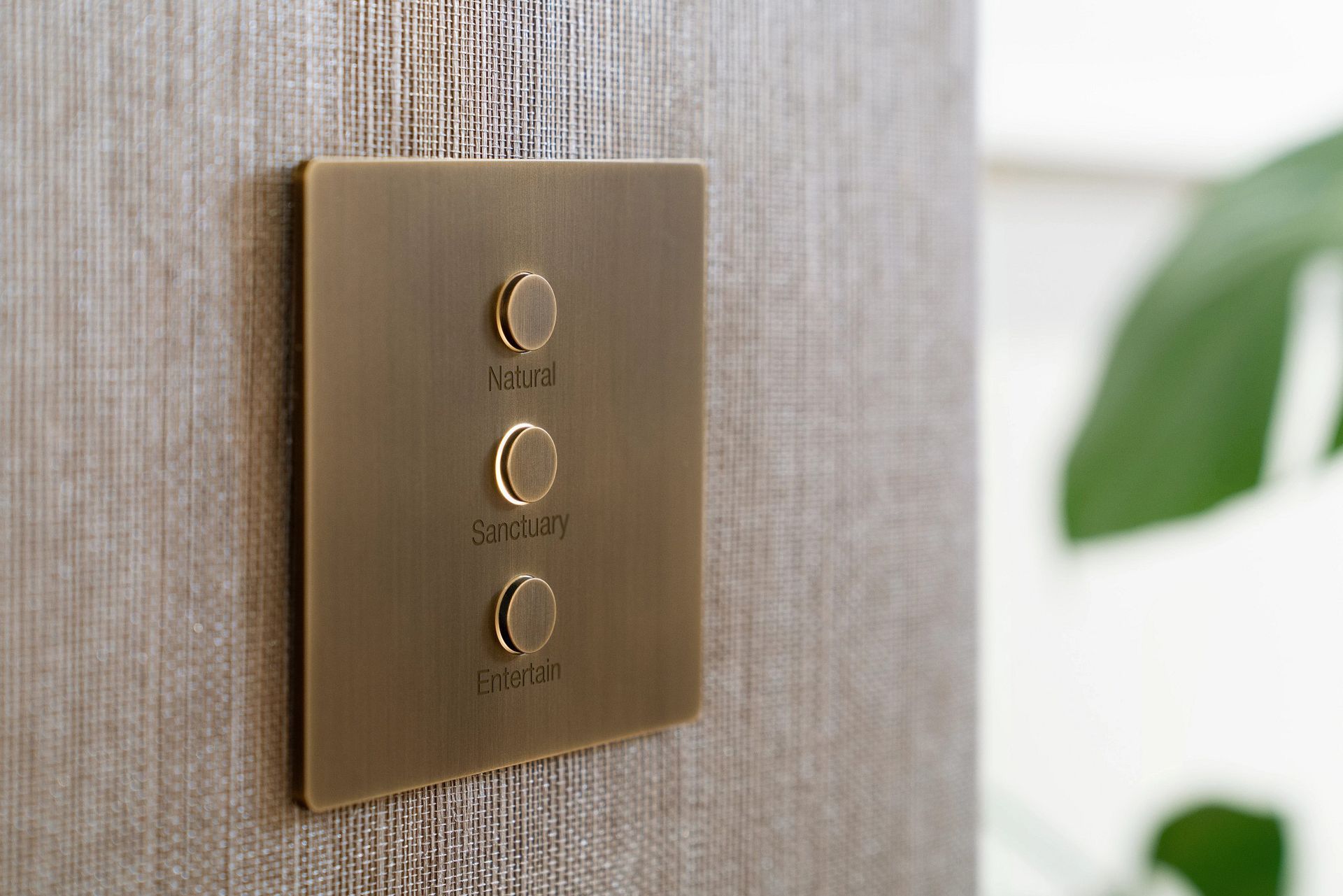
- Avienna — elegant engraved configurations for multi-scene control
If your interior designer has specified a particular keypad finish, or if you want engraved custom scene names on your controls, you need HomeWorks.
2. Lighting Fixture Compatibility
RadioRA 3 works beautifully with standard LED fixtures and supports Lumaris tunable white lighting — which lets you shift between warm and cool white tones throughout the day.
HomeWorks goes further. It natively supports:
- Ketra — Lutron's biological lighting system that mimics natural sunlight, shifting in both color temperature and intensity throughout the day. This is not just tunable white — it's full-spectrum, circadian-calibrated lighting.
- Rania — Lutron's precision LED downlight system, built for architectural lighting design at the highest level.
If you're working with a lighting designer or architect who has specified Ketra fixtures, you are in HomeWorks territory. Full stop.
3. Shade Integration
Both systems support wireless Lutron motorized shades.
HomeWorks also supports
wired shade systems — essential for large installations with dozens of shade groups, or in new construction where wiring the shade motors makes sense architecturally and functionally.
If your project involves a significant number of shades, or you want a single integrated system controlling light and shade together with absolute precision, HomeWorks handles it more elegantly.
4. Programming Depth
This is where the gap becomes most apparent — and where
the difference between a certified Lutron specialist and an ordinary electrician is most visible.
| Capability | RadioRA 3 | HomeWorks QSX |
|---|---|---|
| Basic scenes & schedules | ✔ | ✔ |
| Conditional (if/then) logic | ✖ | ✔ |
| Sequence programming | ✖ | ✔ |
| Circadian lighting (Natural Show) | ✖ | ✔ |
| Press/hold dimming customization | ✖ | ✔ |
| Custom event-based triggers | Limited | Advanced |
HomeWorks' conditional logic is transformative. Example: when you arrive home after sunset, the system knows it — and activates your "arrival evening" scene automatically. When you arrive during the day, a different, softer scene triggers. Your home responds to context, not just commands.
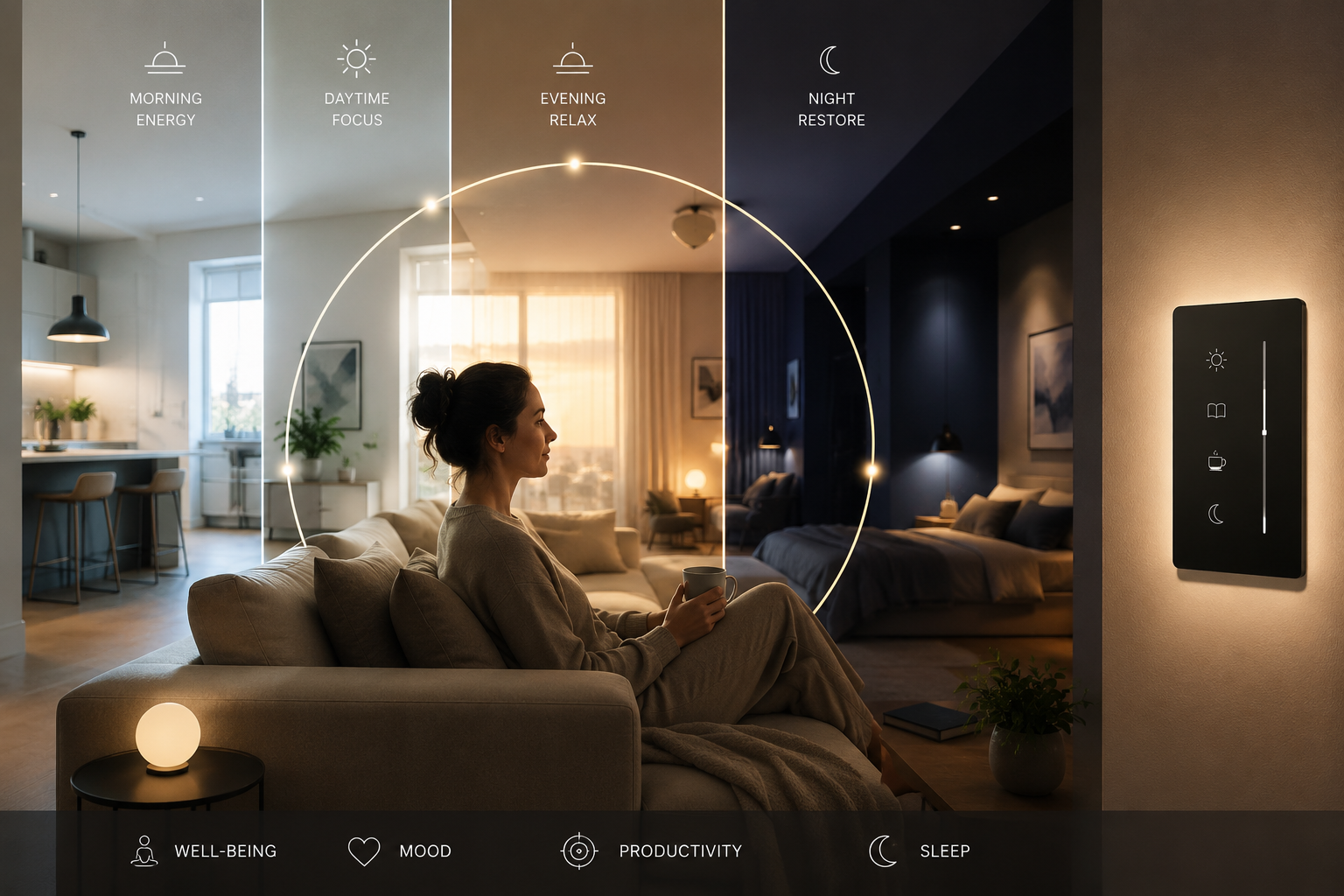
Natural Show — HomeWorks' circadian lighting program — dynamically adjusts both brightness and color temperature throughout the day to mirror the arc of natural sunlight. It's been shown to improve sleep quality, mood, and energy levels. This is the kind of detail that separates a thoughtfully designed home from a technically equipped one.
5. System Integration
RadioRA 3 integrates with voice assistants (Alexa, Google, Siri), works with Control4, and connects to other smart home platforms via Lutron's LEAP API. For most homes, this is more than sufficient.
HomeWorks adds:
- Telnet, RS-232, and IP protocols for deep two-way integration with AV systems, security platforms, and building automation
- Full bidirectional communication — meaning your AV system or security panel can both receive commands from HomeWorks and send commands back to it
- Support for sophisticated automation sequences that span lighting, shading, HVAC, and AV simultaneously
If your smart home system is Control4 and you want lighting to be a native part of the automation ecosystem rather than a parallel one, HomeWorks handles this at a depth that RadioRA 3 simply doesn't offer.
6. Scale & Architecture
| Spec | RadioRA 3 | HomeWorks QSX |
|---|---|---|
| RF Coverage | Up to 7,500 sq ft | Up to 50,000 sq ft |
| Max Devices | ~200 | Up to 10,000 zones |
| Wired Infrastructure | No | Yes (panelized lighting) |
| Multi-Processor Support | No | Yes (up to 15 processors) |
| Wall Clutter Reduction | Moderate | Significant |
HomeWorks' centralized panelized lighting moves most of the electrical hardware to a dedicated panel room — like a home theater rack, but for lighting. The result: cleaner walls, less visible hardware, and a home that's easier to service and expand over time.
What Does It Actually Cost?
We'll be direct: both systems are a professional investment. An ordinary electrician installing smart switches from the big-box store is not the comparison here.
RadioRA 3: For a well-designed home requiring around 100 controlled circuits, expect a budget in the range of $20,000–$25,000 for the system (hardware + installation + programming). This is a ballpark — every home is different.
HomeWorks QSX: Comparable in scope, HomeWorks typically runs about 50% higher — so $30,000–$40,000 for a similar scope of work. Larger estates can go significantly beyond that.
The cost difference reflects real differences in capability. If you don't need HomeWorks' advanced features, RadioRA 3 delivers outstanding results at a lower price point. If your project demands Ketra lighting, designer keypads, circadian programming, or complex integration, HomeWorks pays for itself in what it enables.
Why You Shouldn't Let an Ordinary Electrician Make This Decision
Here's what most homeowners don't realize: Lutron does not allow just anyone to sell or program these systems. Both RadioRA 3 and HomeWorks QSX require installation by a certified Lutron professional. This isn't fine print — it's a quality control requirement that protects you.
An ordinary electrician — even a skilled one — cannot program a HomeWorks system. They can pull the wire. They cannot configure the scenes, tune the circadian programming, integrate the shades, or connect it to your AV system. They cannot troubleshoot it when something goes wrong.
What they
can do is sell you a simpler system, tell you it's equivalent, and leave you wondering why your "smart home" doesn't feel particularly smart.
Premier HAS is a certified Lutron installer. Our team has designed and deployed both RadioRA 3 and HomeWorks systems across Dallas, Frisco, Plano, McKinney, Highland Park, and the surrounding DFW area. We program these systems. We design the lighting around them. And we're here when you need support — not just when you sign a contract.
This is the difference: An electrician installs your lighting. We design an experience.
So Which System Is Right for You?
Choose RadioRA 3 if:
- You're retrofitting an existing home without major construction
- Your home is under 7,500 sq ft
- You want premium smart lighting without the HomeWorks price premium
- You don't need Ketra fixtures or designer Alisse/Palladiom keypads
- Your integration needs are straightforward (voice assistants, basic smart home platform)
- You're building new or doing a major renovation (walls are already open)
- Your home is over 5,000 sq ft, or you're planning for significant expansion
- You want Ketra full-spectrum circadian lighting
- Your designer or architect has specified Palladiom or Alisse keypads
- You need deep integration with a whole-home automation system
- You want conditional logic and Natural Show circadian programming
Ready to Find Out Which System Belongs in Your Home?
You don't have to figure this out alone. Our team will walk through your home, understand how you live in it, and tell you exactly which system fits — and why. No upsell. No guesswork.
→ Explore Our Lutron Installation Services
Or if you already know which direction you're heading:
Premier HAS serves homeowners across the Dallas–Fort Worth area, including Dallas, Plano, Frisco, McKinney, Highland Park, University Park, Southlake, and Collin, Denton, Dallas, and Tarrant Counties. We are a certified Lutron dealer and lighting control specialist — not a general electrician with a smart home page on our website.
Ready to talk?
Contact us here by calling Premier Lighting at 1(214)214-9458 and schedule your free lighting audit.



Control4 Lux vs. Lutron Intelligent Lighting: Which Luxury Lighting Solution Is Right for Your Home?